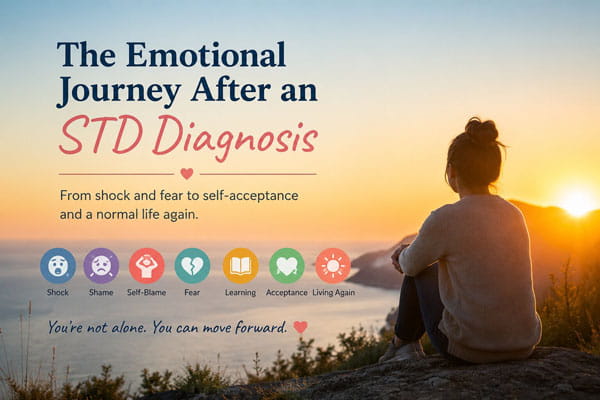
Getting diagnosed with an STD can change your life in a single moment. Many people remember exactly where they were when they heard the news. At first, it can feel like everything has fallen apart. But with time, many people realize that life is far from over.
If you’ve recently been diagnosed, you’re not alone. Millions of people around the world are living healthy, happy lives with an STD. This article shares the emotional journey many people experience after a diagnosis and how things can gradually get better.
The Day I Found Out
I still remember the day I got the call.
The doctor’s voice was calm, but my mind wasn’t. My heart started racing. I couldn’t focus on anything else.
The first thoughts that came into my head were:
“How did this happen?”
“Will anyone ever love me again?”
“Is my life over?”
For the rest of the day, I barely spoke to anyone. I searched online for hours, and honestly, most of what I found only made me feel worse.
Many people on Reddit describe the same experience. Several users say they spent the first few days crying, unable to eat, or expecting the worst.
Feeling Ashamed
The next emotion was shame.
I didn’t want anyone to know.
I felt embarrassed every time I thought about it. I worried people would judge me if they found out.
The truth is, STD stigma can be much harder than the condition itself.
According to the U.S. Centers for Disease Control and Prevention (CDC), 1 in 5 people in the United States has a sexually transmitted infection on any given day. Many infections are extremely common, yet people rarely talk about them openly.
Realizing how common STDs are helped me understand that I wasn’t the only person going through this.
Blaming Myself
For weeks, I kept asking myself the same question.
“Why didn’t I make different choices?”
I replayed old relationships in my head again and again.
Self-blame became exhausting.
Eventually, I learned that blaming myself wasn’t changing anything. It only kept me stuck.
Many people on Quora share similar feelings. One common message is that almost everyone wishes they had known more earlier, but carrying guilt forever doesn’t help anyone.
Being Afraid to Date Again
Dating suddenly felt impossible.
I imagined every conversation ending the same way.
Rejection.
I convinced myself nobody would accept me.
Then I started reading stories from people who were already living with herpes, HPV, HIV, and other STDs.
Many of them were dating.
Some were married.
Some had families.
That surprised me.
I realized my biggest fears weren’t always reality.
Instead of rushing into dating again, I focused on rebuilding my confidence first.
Learning the Facts
This was the turning point.
I stopped reading random horror stories online and started using trusted medical sources.
I learned that many STDs are manageable.
Some can be treated.
Others can be controlled with medication and healthy habits.
I also learned about reducing transmission risks and having honest conversations with future partners.
The more I learned, the calmer I became.
Fear often grows when we don’t have accurate information.
Accepting Myself
Acceptance didn’t happen overnight.
Some days were still difficult.
But little by little, I stopped letting my diagnosis define who I was.
I was still the same person.
I still had goals.
I still had friends.
I still deserved love and respect.
Reading other people’s stories helped a lot.
Communities on Reddit and support websites reminded me that thousands of people had already walked this road before me.
Living Normally Again
Eventually, life started feeling normal again.
I went back to work.
I traveled.
I laughed with friends.
I exercised.
I dated again.
The diagnosis became just one small part of my life instead of my entire identity.
For people who want to meet others who already understand the experience of living with herpes, websites like datingsitesforpeoplewithherpes.com can provide another option. Some people find it less stressful to talk with others who already understand the challenges without having to explain everything from the beginning.
Everyone moves forward at a different pace, and that’s completely okay.
You’re Not Alone
If you’re at the beginning of this journey, remember this:
It’s normal to feel shocked.
It’s normal to feel scared.
It’s normal to have questions.
But those feelings usually don’t last forever.
With accurate information, support from others, and time, many people regain confidence and continue enjoying work, friendships, dating, and everyday life.
Your diagnosis is only one chapter of your story. It does not define your future.
Comments are closed