Learning that you have herpes (HSV) can bring up a lot of questions. One of the biggest is whether you can still enjoy intimacy while lowering the chance of passing the virus to a partner.
The good news is yes. Millions of people living with HSV have healthy relationships and active dating lives. With the right information and a few simple habits, it is possible to practice safer intimacy and feel more confident.
You’re Not Alone
Herpes is one of the most common viral infections in the world.
According to the World Health Organization (WHO), an estimated 846 million people aged 15–49 were living with genital herpes in 2020. Around 42 million new infections occurred that year alone.
These numbers show that HSV is far more common than many people realize.
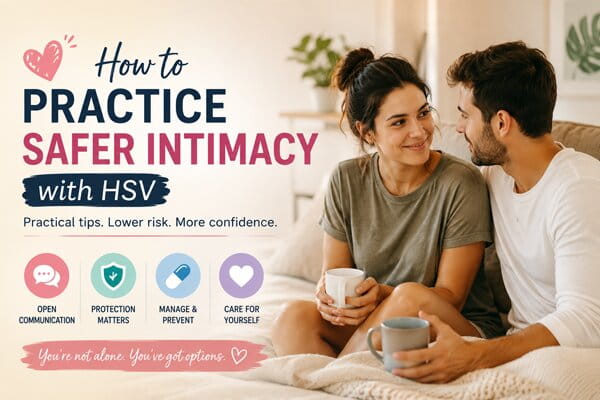
safe intimacy
What Does “Safer Intimacy” Mean?
There is no way to reduce the transmission risk to zero, but several proven steps can lower the chances.
Safer intimacy means making informed choices together. It can include communication, medical treatment, protection, and paying attention to your body.
Many couples living with HSV have long-term relationships without passing the virus.
1. Know Your Outbreak Signs
Many people notice warning symptoms before an outbreak starts.
These may include:
- Tingling
- Itching
- Burning
- Mild pain
If you notice these symptoms, avoid sexual contact until the area has completely healed.
The virus is most active during an outbreak, making transmission more likely.
2. Consider Daily Antiviral Medication
Many people with recurrent HSV take daily antiviral medication under the guidance of their healthcare provider.
Research has shown that suppressive therapy can lower the risk of transmitting genital HSV-2 to a partner.
Common medications include:
- Acyclovir
- Valacyclovir
- Famciclovir
Talk with your healthcare provider about whether daily treatment is right for you.
3. Use Condoms or Dental Dams
Condoms and dental dams cannot completely prevent HSV because the virus may spread from skin that is not covered.
However, they can reduce the chance of transmission and are recommended by many healthcare professionals as part of safer sex practices.
Using protection consistently is one simple way to lower risk.
4. Be Honest Before Intimacy
Many people worry about telling a partner they have HSV.
While the conversation may feel uncomfortable, honesty helps both people make informed decisions.
You don’t have to tell your whole story. Keep it simple.
For example:
“I have herpes. I manage it carefully, and I wanted you to know before we become intimate.”
You may be surprised by the response. Many people already know someone with HSV or have learned about it before.
5. Learn Your Personal Triggers
Not everyone has the same outbreak triggers.
Some common ones include:
- Stress
- Poor sleep
- Illness
- Friction during sex
- Too much sun exposure (especially for oral HSV)
Keeping a journal can help you notice patterns.
Reducing outbreaks may also reduce opportunities for transmission.
6. Remember That HSV Can Spread Without Symptoms
Even when you feel completely normal, HSV can sometimes be released from the skin. This is called asymptomatic viral shedding.
That is why combining several prevention methods is often more effective than relying on only one.
Daily medication, protection, avoiding outbreaks, and open communication all work together.
What Real People Say
Many online discussions show that life with HSV becomes much easier over time.
One Reddit user shared that after learning more about the virus and talking openly with partners, dating became much less stressful.
Another common topic on Quora is whether people with herpes can have successful relationships. Many answers come from people who have been happily married or in long-term relationships for years while managing HSV responsibly.
Everyone’s experience is different, but these conversations remind many newly diagnosed people that they are not alone.
Dating with Confidence
Finding people who already understand HSV can remove some of the anxiety around dating.
Many singles choose communities designed for people living with herpes. Websites like datingsitesforpeoplewithherpes.com provide dating advice, educational articles, and information about HSV-friendly dating platforms.
Some people find it easier to start conversations when both people already understand the condition.
Focus on Facts, Not Fear
There is a lot of misinformation about herpes online.
Reliable information from healthcare organizations is much more helpful than rumors or frightening headlines.
HSV does not define who you are.
With good communication, practical precautions, and support, many people enjoy happy relationships, active dating lives, and healthy intimacy for many years.
The more you learn about HSV, the easier it becomes to replace fear with confidence. Small, informed choices can make a big difference for both you and your partner.
Comments are closed