Finding out that you have herpes can bring many questions, especially if you are experiencing your first outbreak. What will the sores look like? How long will they last? Will they come back? These are common concerns, and understanding what happens during a herpes outbreak can make the experience less frightening.
Herpes is a common viral infection caused by the herpes simplex virus (HSV). There are two main types: HSV-1 and HSV-2. HSV-1 commonly causes oral herpes, while HSV-2 is more often associated with genital herpes. However, both types can affect the mouth or genital area.
According to the World Health Organization (WHO), approximately 3.8 billion people under age 50 worldwide have HSV-1, while around 520 million people aged 15–49 have HSV-2. Herpes is much more common than many people realize.
Let’s look at what happens during an outbreak, how symptoms develop, and what you can do to feel more comfortable.
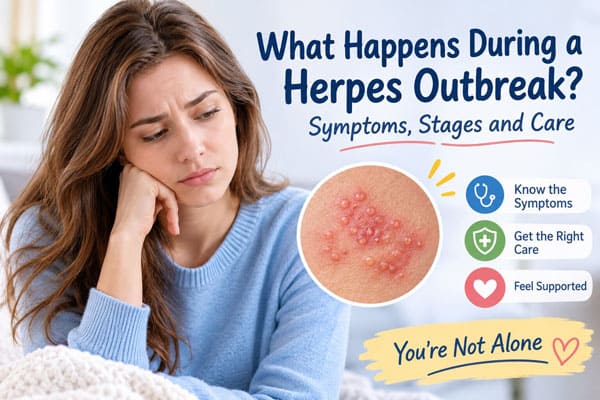
1. The Early Warning Signs of a Herpes Outbreak
A herpes outbreak does not always begin with visible sores. For some people, the first signs are small changes in how their skin feels.
This early stage is sometimes called the prodrome stage. It may happen hours or a few days before blisters appear.
Common warning signs include:
- Tingling: A strange tingling feeling around the lips, genitals, or anus.
- Itching: The affected area may feel itchy or irritated.
- Burning: Some people experience a mild burning or stinging sensation.
- Tenderness: The skin may feel sensitive or uncomfortable when touched.
Not everyone experiences these warning signs. Some people notice blisters without feeling anything beforehand.
Recognizing your personal early symptoms can help you take action sooner. If you have already been diagnosed, ask your healthcare provider whether keeping antiviral medication available for early treatment would be helpful.
2. Blisters and Sores Begin to Appear
After the early warning signs, small bumps or fluid-filled blisters may develop around the affected area.
For genital herpes, these blisters can appear on or around the penis, vagina, buttocks, thighs, or anus. Oral herpes usually causes blisters around the lips or mouth.
The blisters may appear individually or in small groups. They can feel painful, itchy, or sensitive.
As the outbreak develops, the blisters may break open and turn into shallow, painful sores. These sores can cause discomfort when walking, sitting, urinating, eating, or talking, depending on their location.
Some people also experience swollen lymph nodes near the affected area.
It is important to remember that herpes does not look exactly the same for everyone. Some outbreaks cause several noticeable sores, while others produce only a few small bumps or very mild symptoms.
3. The Sores Start to Heal
Once the blisters break open, the body begins repairing the affected skin.
The sores gradually become less painful, dry out, and heal. Depending on the location, they may develop a crust or scab before the skin returns to normal.
During this stage, you may notice:
- Less redness and swelling.
- Reduced itching and burning.
- Smaller or flatter sores.
- Gradual improvement in skin sensitivity.
A first genital herpes outbreak can be more uncomfortable and last longer than later outbreaks. Recurrent outbreaks are usually shorter and milder.
According to the CDC, herpes sores may take a week or more to heal after the blisters break open. The overall recovery time varies from person to person.
4. What Does a First Herpes Outbreak Feel Like?
The first recognized herpes outbreak can be particularly challenging because your body may not have experienced the virus before.
Besides blisters and sores, some people experience flu-like symptoms, such as:
- Fever or chills.
- Headaches.
- Muscle or body aches.
- Fatigue.
- Swollen lymph nodes.
- Painful urination.
Not everyone has these symptoms, and some people have such mild signs that they mistake them for another skin condition.
If you notice unusual blisters, sores, or genital discomfort, visit a healthcare provider. A swab test from a fresh blister or sore can help identify the virus and determine whether it is HSV-1 or HSV-2.
Getting a proper diagnosis is important because other conditions can cause similar symptoms.
5. Why Do Herpes Outbreaks Come Back?
After the first infection, the herpes virus stays in the body in an inactive state. It can become active again later, causing another outbreak.
However, not everyone experiences repeated outbreaks. Some people have several episodes, while others rarely or never notice symptoms again.
Certain factors may be associated with recurrent outbreaks, including:
- Stress: Emotional or physical stress may affect the body’s ability to manage the virus.
- Illness: Being sick or having a fever may sometimes trigger an outbreak.
- Lack of sleep: Poor sleep and exhaustion may affect your overall well-being.
- Hormonal changes: Some people notice outbreaks around their menstrual periods.
- Skin irritation: Friction or irritation in the affected area may contribute to discomfort.
Triggers are different for everyone. Keeping a simple record of your symptoms, sleep, stress levels, and other changes may help you recognize personal patterns.
It is also worth remembering that an outbreak can happen without an obvious trigger. You have not necessarily done anything wrong if symptoms return.
6. How Can You Manage a Herpes Outbreak?
Although there is currently no cure for herpes, several approaches can help manage symptoms and make an outbreak easier to handle.
Here are some practical tips:
Keep the affected area clean.
Gently clean the area with plain water or mild saltwater. Avoid strongly scented soaps and products that may irritate sensitive skin.
Wear comfortable clothing.
Choose loose-fitting underwear and breathable clothing to reduce friction around genital sores.
Try a cool compress.
A cold pack wrapped in a clean towel may help relieve swelling and discomfort. Never put ice directly on your skin.
Drink enough water.
Staying hydrated is especially helpful if urination causes discomfort. Some people find it easier to urinate while gently pouring lukewarm water over the affected area.
Get enough rest.
Give your body time to recover. Try to maintain a regular sleep schedule and avoid activities that make you feel physically uncomfortable.
Talk to a healthcare provider about medication.
Antiviral medicines such as acyclovir, valacyclovir, and famciclovir can help shorten outbreaks and reduce symptoms. For people who experience frequent recurrences, daily suppressive treatment may also be an option.
Treatment works best when started early, so talk with a healthcare professional about a suitable plan.
7. Can You Pass Herpes to Someone During an Outbreak?
Yes. Herpes is more easily transmitted when blisters, sores, or early warning symptoms are present.
The virus can spread through direct skin-to-skin contact, including oral, vaginal, and anal sexual contact. Even when sores are not visible, transmission is still possible because the virus can sometimes be released from the skin without noticeable symptoms.
To reduce the risk of transmission:
- Avoid kissing or sexual contact involving the affected area from the first warning signs until the sores have completely healed.
- Talk openly with sexual partners about your diagnosis.
- Use condoms or other appropriate barriers to lower transmission risk.
- Discuss daily antiviral medication with your healthcare provider if you want additional protection.
Remember that condoms reduce but do not completely eliminate the risk because herpes can affect skin areas that condoms do not cover.
8. When Should You See a Doctor?
If you think you are experiencing herpes symptoms for the first time, arrange a medical appointment as soon as possible. Early evaluation can help confirm the diagnosis and provide access to treatment.
You should also contact a healthcare professional if:
- Your sores are extremely painful or getting worse.
- You have difficulty urinating.
- You experience a high fever or feel very unwell.
- Your symptoms do not improve or take longer than expected to heal.
- You experience frequent or particularly uncomfortable outbreaks.
Pregnant people who develop genital herpes symptoms or have concerns about a possible infection should contact their healthcare provider promptly, as herpes can pose risks to newborn babies.
Do not rely on appearance alone to diagnose herpes. A healthcare professional can recommend appropriate testing and care.
9. Life After a Herpes Outbreak: You Can Still Have a Happy Relationship
One of the biggest challenges of herpes is not always the physical discomfort. For many people, the emotional impact can be just as difficult.
You may worry about dating, telling a new partner, or being judged because of your diagnosis. These feelings are understandable, especially when you are still learning about the condition.
But having herpes does not mean you have to give up on love, dating, or a happy relationship.
Honest communication, mutual respect, and a good understanding of herpes can help partners make informed decisions together.
If you want to meet people who understand what living with herpes is like, datingsitesforpeoplewithherpes can be a useful place to explore herpes-related dating information and community resources.
It also provides a supportive dating environment for people living with herpes, HIV, HPV, and other STDs. Members can use features such as private messaging, blogs, chatrooms, and STD Q&A to share experiences, learn from others, and communicate with people who understand their concerns.
You deserve respect and kindness, regardless of your health status. A herpes diagnosis is only one part of your life, not your whole identity.
Conclusion
A herpes outbreak usually develops through several stages, from early tingling or itching to blisters, open sores, and gradual healing. The first outbreak may be more uncomfortable, while later episodes are often milder and shorter.
Although herpes stays in the body, it can be managed with proper treatment, self-care, and support. Learning to recognize your symptoms and understand your treatment options can help you feel more prepared.
Most importantly, herpes does not define who you are. With the right information and support, you can take care of your health and continue enjoying an active, happy life.
Medical note: This article is for general educational purposes and is not a substitute for professional medical advice, diagnosis, or treatment. Speak with a qualified healthcare provider about your symptoms and individual care needs.
Comments are closed