Herpes is one of the most common viral infections worldwide, yet many people still have questions about it. If you have heard about HSV-1 and HSV-2, you may wonder whether they are the same, how they spread, and whether one is more serious than the other.
Both are types of herpes simplex virus (HSV). They can cause oral or genital herpes, and both remain in the body for life. However, they have some important differences in how they spread, where they usually appear, and how often symptoms return.
Understanding these differences can help you make informed decisions about your health, relationships, and daily life.
1. What Are HSV-1 and HSV-2?
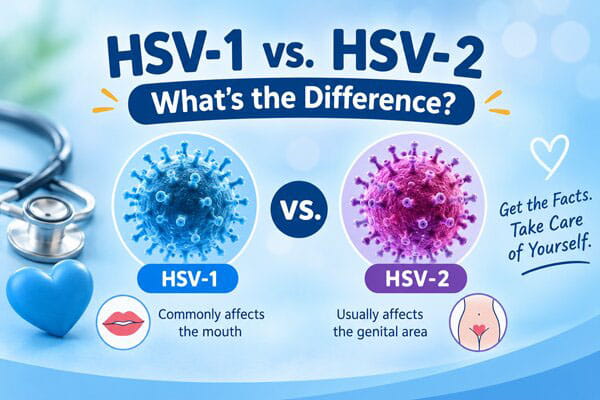
HSV-1 and HSV-2 are two types of herpes simplex virus. Both can cause small, painful blisters or sores, although many infected people have no noticeable symptoms.
HSV-1 (Herpes Simplex Virus Type 1)
HSV-1 is commonly associated with oral herpes, which usually causes cold sores around the lips or mouth. Many people acquire it during childhood through everyday contact, such as kissing or sharing items that have touched saliva.
However, HSV-1 is not limited to the mouth. It can also cause genital herpes, often through oral-genital contact.
HSV-2 (Herpes Simplex Virus Type 2)
HSV-2 is primarily transmitted through sexual contact and usually affects the genital or anal area. It is a common cause of genital herpes and is more likely than genital HSV-1 to cause repeated outbreaks.
Both types can be transmitted even when an infected person does not have visible sores.
2. HSV-1 vs. HSV-2: Key Differences
Although the two viruses are closely related, there are several differences worth understanding.
| Feature | HSV-1 | HSV-2 |
|---|---|---|
| Common infection site | Mouth and lips | Genital and anal areas |
| Main transmission route | Oral contact | Sexual skin-to-skin contact |
| Genital infection | Yes | Yes |
| Oral infection | Yes | Less common |
| Recurrence of genital symptoms | Usually less frequent | Usually more frequent |
| Asymptomatic transmission | Possible | Possible |
| Long-term infection | Yes | Yes |
One important point: The location of an infection does not tell you which type of herpes someone has. HSV-1 can cause genital herpes, and HSV-2 can occasionally affect the mouth.
3. What Are the Symptoms of HSV-1 and HSV-2?
Some people experience noticeable symptoms, while others may have very mild signs or no symptoms at all.
Common herpes symptoms include:
- Small blisters or painful sores around the mouth or genital area.
- Itching, tingling, or burning sensations.
- Pain during urination when genital sores are present.
- Swollen lymph nodes.
- Fever, body aches, or fatigue, especially during the first outbreak.
The first noticeable episode may be more uncomfortable than later outbreaks. However, symptoms vary from person to person.
HSV-2 generally causes more frequent genital recurrences than HSV-1. People with genital HSV-1 often experience fewer outbreaks over time.
Remember that other skin conditions and infections can cause similar symptoms. A healthcare professional can help determine the cause.
4. How Are HSV-1 and HSV-2 Transmitted?
Both types spread through direct contact with infected skin, sores, or certain body fluids.
HSV-1 commonly spreads through kissing, oral contact, or oral sex. HSV-2 mainly spreads through vaginal, anal, or other sexual skin-to-skin contact.
Here are some important facts about transmission:
- Herpes can spread even when there are no visible sores.
- Oral HSV-1 can be transmitted to another person’s genital area through oral sex.
- Avoiding intimate contact during an outbreak can help lower transmission risk.
- Condoms and other barrier methods can reduce the risk, but they cannot provide complete protection because herpes can affect uncovered skin.
Open communication with partners and understanding personal risks are important parts of responsible sexual health.
5. How Are HSV-1 and HSV-2 Diagnosed?
If you notice unusual blisters, sores, or other possible symptoms, consider visiting a healthcare provider.
There are two commonly used testing approaches:
Swab Test: If you have an active sore, a healthcare professional can collect a sample for laboratory testing. A PCR test can identify the virus and determine whether it is HSV-1 or HSV-2.
Blood Test: Type-specific blood tests can detect antibodies to HSV-1 or HSV-2. However, a positive HSV-1 blood test cannot tell whether the infection is oral or genital. Blood tests also have limitations and may sometimes require confirmation.
Testing is not always necessary for everyone without symptoms. Discuss the benefits and limitations with a healthcare professional.
6. Treatment Options for HSV-1 and HSV-2
Currently, there is no cure for herpes. However, antiviral medications can help manage symptoms and reduce outbreaks.
Common prescription antiviral medications include:
- Acyclovir
- Valacyclovir
- Famciclovir
Depending on your situation, a healthcare provider may recommend episodic treatment when symptoms appear or daily suppressive therapy to reduce frequent outbreaks.
Other simple steps may help you feel more comfortable during an outbreak:
- Keep the affected area clean and dry.
- Wear loose, comfortable clothing.
- Avoid picking or scratching sores.
- Get enough rest and stay hydrated.
- Avoid intimate contact until sores have healed.
If you are pregnant or have a weakened immune system, talk with a healthcare professional about appropriate care.
7. Living with HSV-1 or HSV-2
A herpes diagnosis can bring many emotions, including worry, embarrassment, or uncertainty about future relationships. These feelings are understandable, but herpes does not define who you are.
Millions of people live with HSV-1 or HSV-2. According to the World Health Organization, an estimated 3.8 billion people under age 50 had HSV-1 in 2020, while approximately 520 million people aged 15–49 had HSV-2.
These numbers show just how common herpes is around the world.
If you are dating with herpes, honesty and mutual respect can help create a healthier relationship. Learning about your condition, discussing it with potential partners, and making informed decisions about protection can make dating feel less stressful.
You can also find support through communities such as Datingsitesforpeoplewithherpes.com. These resources offer opportunities to explore herpes-related information, share experiences, and interact with people who understand the challenges of living with an STI.
You deserve respect, understanding, and a fulfilling life, regardless of your HSV status.
Frequently Asked Questions
1. Is HSV-1 more common than HSV-2?
Yes. According to WHO estimates, HSV-1 affects approximately 64% of people under age 50 worldwide, while HSV-2 affects around 13% of people aged 15–49.
2. Can HSV-1 turn into HSV-2?
No. HSV-1 does not change into HSV-2. They are two different viruses. However, a person with one type can also acquire the other.
3. Is HSV-2 more serious than HSV-1?
Not necessarily for every individual. However, genital HSV-2 generally causes more frequent recurrences and viral shedding than genital HSV-1. Both types deserve proper care and attention.
4. Can you have herpes without knowing it?
Yes. Many people have no noticeable symptoms or mistake mild symptoms for other skin conditions. They may still transmit the virus to others.
5. Can people with HSV-1 or HSV-2 have healthy relationships?
Absolutely. Herpes does not prevent someone from having a happy relationship. Open communication, mutual understanding, and appropriate precautions can help partners manage their sexual health together.
Conclusion
HSV-1 and HSV-2 share many similarities, but they differ in their usual transmission routes, infection sites, and recurrence patterns. Knowing which type you have can help you understand your health and discuss appropriate care with a healthcare professional.
Most importantly, a herpes diagnosis does not mean you have to give up on dating, relationships, or happiness. With the right information, treatment, and support, you can continue living a healthy and confident life.
Medical Disclaimer: This article is intended for general educational purposes only. It is not a substitute for professional medical advice, diagnosis, or treatment. Consult a qualified healthcare professional for personal medical guidance.
Recommended authoritative references
These sources support the medical information in the article:
- WHO – Herpes Simplex Virus (2025) — Global prevalence and transmission information.
- CDC – Genital Herpes Treatment Guidelines — Recurrences, antiviral treatment, and transmission prevention.
- CDC – About Genital Herpes — Symptoms, testing, and basic herpes information.
Comments are closed