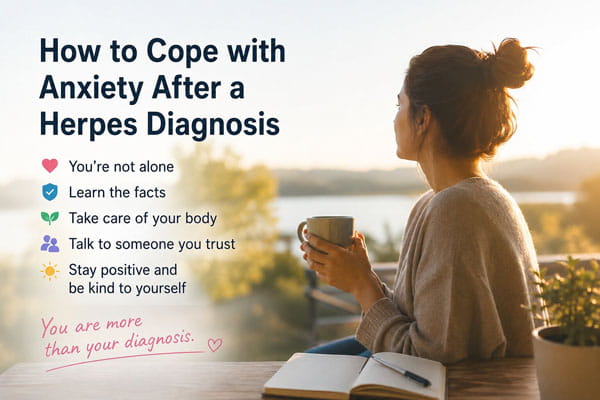
Finding out you have herpes can bring a wave of emotions. Many people feel shocked, scared, embarrassed, or worried about what comes next. If you’ve recently been diagnosed, you’re not alone. Anxiety after a herpes diagnosis is incredibly common, and it often gets better with time, support, and accurate information.
The good news is that herpes is a manageable condition. Millions of people around the world live full, happy lives while managing HSV. Learning how to cope with anxiety is just as important as learning how to manage physical symptoms.
Why a Herpes Diagnosis Can Feel Overwhelming
For many people, the emotional impact is harder than the physical symptoms. Questions may race through your mind:
- Will anyone want to date me?
- Should I tell my family or friends?
- Will I have outbreaks forever?
- Did my life just change completely?
These thoughts can trigger anxiety, especially during the first few weeks after diagnosis. Remember that your first reaction does not predict how you will feel months from now.
You’re Far From Alone
According to the World Health Organization (WHO), around 3.8 billion people under age 50 have HSV-1 infection, while about 520 million people aged 15–49 are living with HSV-2 worldwide.
These numbers show something important: herpes is extremely common. Many people never know they have it because symptoms can be mild or absent.
Knowing you’re part of such a large community can help reduce the feeling of isolation.
Anxiety Is a Normal Response
Feeling anxious doesn’t mean you’re weak. A diagnosis often creates uncertainty, and uncertainty naturally causes stress.
Common signs of anxiety include:
- Trouble sleeping
- Constant worrying
- Feeling embarrassed
- Avoiding social situations
- Fear of dating
- Replaying the diagnosis over and over
These feelings usually become less intense as you learn more about herpes and regain confidence.
Learn the Facts Instead of Believing the Stigma
One of the biggest causes of herpes anxiety is misinformation.
Here are a few facts:
- Herpes is a common viral infection.
- Many people never experience noticeable symptoms.
- Antiviral medication can reduce outbreaks and lower transmission risk.
- Most people with herpes continue dating, working, traveling, and enjoying life normally.
The more reliable information you read, the less room there is for fear.
Trusted medical resources include:
- WHO: https://www.who.int/news-room/fact-sheets/detail/herpes-simplex-virus
- CDC: https://www.cdc.gov/std/herpes
Stop Reading Scary Stories All Day
It’s natural to search online after receiving a diagnosis.
However, spending hours reading worst-case stories often increases anxiety.
Instead, set limits on your research. Read information from trusted health organizations, then take a break.
Try replacing endless searching with activities that calm your mind:
- Going for a walk
- Listening to music
- Reading a favorite book
- Exercising
- Talking with someone you trust
Giving your brain a break helps reduce anxious thoughts.
Talk to Someone Who Understands
Keeping everything inside can make anxiety feel heavier.
Many people find relief by talking with:
- A therapist
- A trusted friend
- A healthcare provider
- An online herpes support community
One Reddit discussion shows that many long-term members say life became much easier after the first few months because they realized they were not alone.
You can also find questions and experiences shared on Quora.
Reading real experiences reminds you that thousands of people have faced the same worries—and moved forward successfully.
Remember That Dating Is Still Possible
One of the biggest fears after diagnosis is dating.
Many people assume nobody will accept them, but that simply isn’t true.
Honest communication, education, and confidence make a huge difference. Plenty of couples build healthy, lasting relationships where one or both partners have herpes.
Some people also feel more comfortable meeting others who already understand HSV. Communities like datingsitesforpeoplewithherpes.com provide a place where members can meet people with similar experiences, making conversations about herpes much less stressful.
The diagnosis does not define your ability to find happiness or enjoy relationships.
Practice Healthy Habits That Reduce Anxiety
Taking care of your body also helps your mind.
Simple habits include:
- Getting enough sleep
- Eating balanced meals
- Staying active
- Drinking enough water
- Practicing deep breathing
- Reducing excessive alcohol intake
- Taking medication as prescribed
Stress can sometimes contribute to herpes outbreaks for some people, so reducing anxiety may benefit both your emotional and physical well-being.
Challenge Negative Thoughts
Anxiety often creates thoughts that sound convincing but aren’t true.
For example:
“I’ll always be alone.”
Replace it with:
“Millions of people with herpes have successful relationships.”
Or:
“My life is ruined.”
Replace it with:
“My life has changed, but it isn’t over.”
Learning to question anxious thoughts is a powerful coping skill.
Give Yourself Time
Healing emotionally doesn’t happen overnight.
The first few days or weeks are usually the hardest. Over time, herpes becomes just one small part of your life instead of something that dominates your thoughts.
Many people later say they spend far more time thinking about work, family, hobbies, or vacations than they do about herpes.
That’s a sign that anxiety has lost its power.
You’re More Than Your Diagnosis
Herpes is a medical condition—not your identity.
It doesn’t change your personality, your talents, your goals, or your value as a person.
Treat yourself with the same kindness you would offer a close friend facing the same situation.
Recovery from anxiety takes patience, but it happens every day for people around the world.
As you learn the facts, build healthy routines, and talk with supportive people, you’ll likely discover that life after a herpes diagnosis is far more hopeful than it first appeared.
Comments are closed