Many people living with herpes enjoy staying active. Regular exercise supports your heart, muscles, mood, and immune system. But what happens when a herpes outbreak appears? Is it still safe to work out?
The good news is that, in most cases, you can continue moving your body. The key is choosing the right type of exercise and paying attention to how you feel. During an outbreak, your body is working hard to heal, so a few adjustments can help you recover faster while staying active.
Can You Exercise During a Herpes Outbreak?
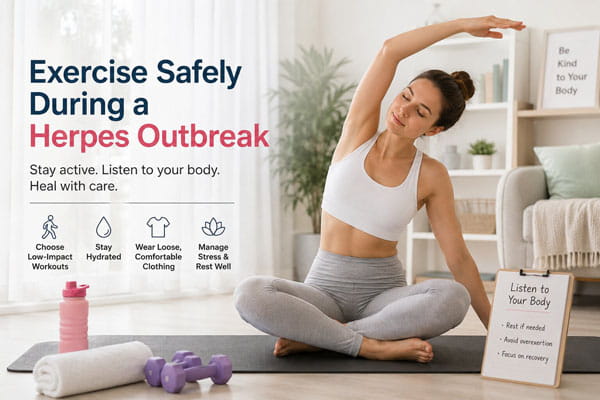
Yes, but it depends on your symptoms.
According to the Centers for Disease Control and Prevention (CDC), herpes simplex virus (HSV) infections often come with recurring outbreaks that vary from person to person. Some people experience only mild discomfort, while others may have painful sores, fatigue, swollen lymph nodes, or flu-like symptoms.
If you only have mild symptoms, gentle exercise is generally fine. However, if you have fever, severe pain, dizziness, or feel exhausted, it’s better to rest until you recover.
Listening to your body is always the best approach.
Why Exercise Can Still Be Helpful
Exercise offers more than physical benefits.
Regular movement may help:
- Reduce stress
- Improve sleep quality
- Boost mood
- Support immune function
- Maintain a healthy weight
Stress is one of the most commonly reported triggers for herpes outbreaks. While research has not proven that stress causes every outbreak, many people notice flare-ups during stressful periods.
The CDC estimates that genital herpes affects millions of people in the United States, making it one of the most common sexually transmitted infections.
Best Exercises During a Herpes Outbreak
Not every workout is ideal during an outbreak. Gentle activities are usually the safest choice.
Walking
Walking increases blood circulation without placing too much stress on your body. Even a 20-30 minute walk can improve your mood and energy.
Stretching
Light stretching helps reduce muscle tension and keeps your body flexible. Avoid stretches that cause friction around affected areas.
Yoga
Gentle yoga combines movement with breathing exercises, helping reduce stress while improving flexibility.
Choose restorative or beginner classes instead of power yoga.
Swimming?
Swimming is usually best avoided if you have open sores. Pool chemicals may irritate lesions, and public pools are not the most comfortable environment during an active outbreak.
Once your skin has healed, swimming is generally fine.
Exercises to Avoid
Some workouts may make symptoms worse.
Consider postponing:
- Long-distance running
- Heavy weightlifting
- High-intensity interval training (HIIT)
- Cycling if sores are located where the bike seat creates pressure
- Contact sports if sores could become irritated
Friction, heat, and excessive sweating may increase discomfort for some people.
Wear Comfortable Clothing
Clothing matters more than many people realize.
Choose:
- Loose-fitting shorts or pants
- Breathable cotton underwear
- Moisture-wicking shirts
- Clean workout clothes every session
Avoid tight leggings or compression shorts if they rub against active sores.
Keeping the affected area clean and dry can help reduce irritation.
Stay Hydrated
Drink plenty of water before, during, and after exercise.
Hydration supports normal body functions and helps replace fluids lost through sweat.
If you’re exercising outdoors during hot weather, take extra breaks.
Don’t Ignore Pain
A little muscle soreness after exercise is normal.
Pain from herpes lesions is different.
If movement causes burning, rubbing, or sharp discomfort around the affected area, stop the activity and rest.
Healing should always come first.
Nutrition Supports Recovery
Exercise and nutrition work together.
Many people focus on eating foods rich in:
- Vegetables
- Fruits
- Lean protein
- Whole grains
- Healthy fats
Although many websites discuss lysine supplements or avoiding arginine-rich foods, scientific evidence remains mixed. If you’re considering supplements, talk with your healthcare provider first.
Community Experiences
Many people living with HSV share their experiences online.
On Reddit, users frequently mention switching to walking, yoga, or light home workouts during outbreaks. Others say taking several rest days actually helped them recover faster instead of pushing through difficult workouts.
On Quora, people often recommend wearing loose clothing, staying hydrated, and reducing workout intensity until symptoms improve.
These personal experiences are not medical advice, but they show that many people successfully stay active by adjusting their routines.
Tips to Prevent Exercise-Related Irritation
Simple habits can make workouts much more comfortable.
- Shower after exercising.
- Change out of sweaty clothes promptly.
- Wash workout towels regularly.
- Avoid sharing personal hygiene items.
- Get enough sleep every night.
- Manage stress with meditation or deep breathing.
These healthy habits support your overall wellness and may also help reduce future discomfort.
When Should You Skip Exercise?
Take a break if you have:
- Fever
- Severe fatigue
- Widespread sores
- Significant pain
- Difficulty walking
- A healthcare provider recommends rest
Missing a few workouts won’t erase your progress. Recovery is part of a healthy fitness routine.
Living Well with HSV
A herpes diagnosis does not mean giving up an active lifestyle.
Most people return to their regular workouts once symptoms improve. Over time, many also learn which activities feel best during different stages of an outbreak.
Patience, good self-care, and paying attention to your body’s signals can help you stay healthy while reducing unnecessary discomfort.
Remember, exercise should make you feel better—not worse. If a workout leaves you feeling drained or increases irritation, choosing rest for a day or two is often the healthier option.
Comments are closed